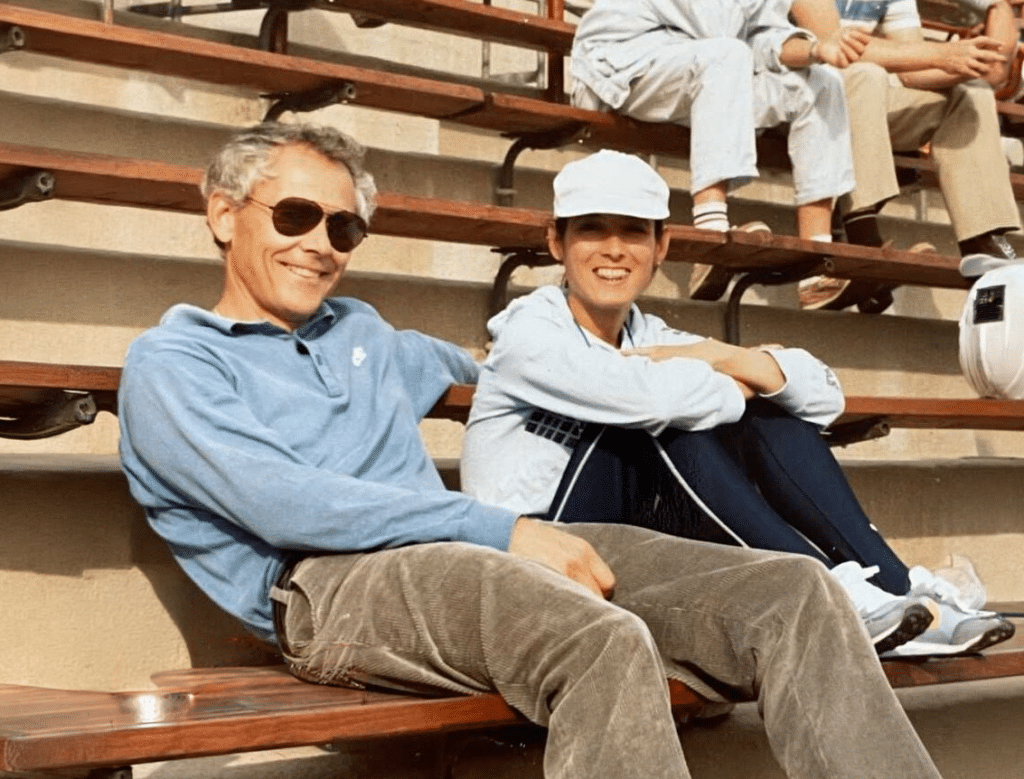
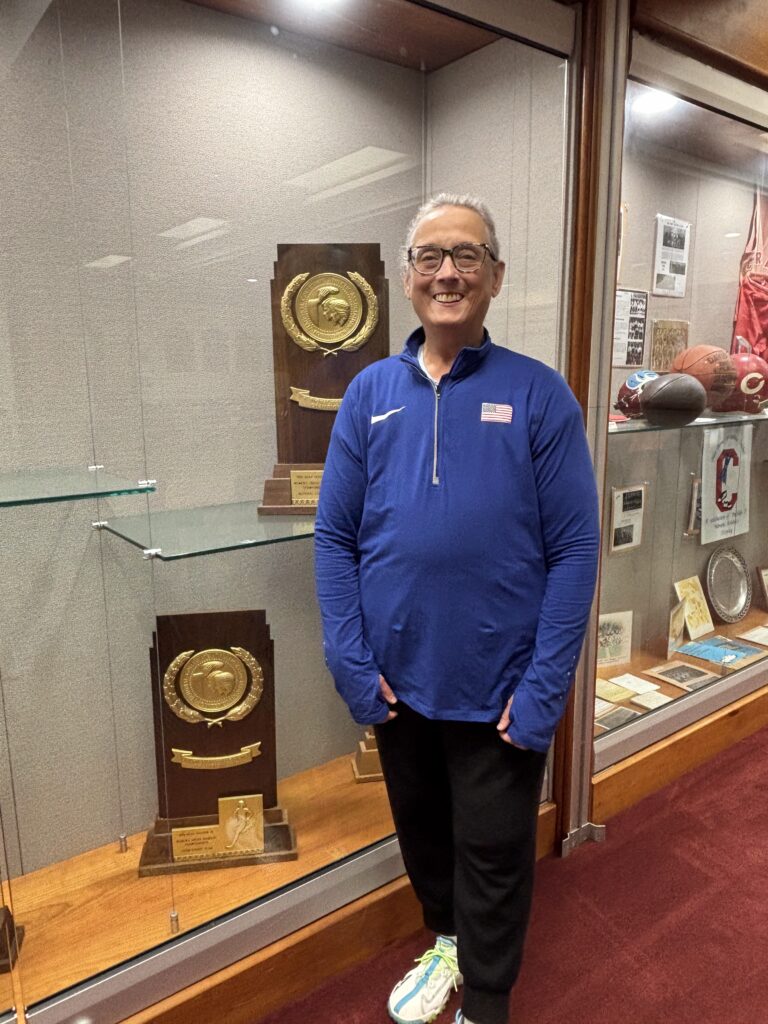
To the modern running world, the SUNY Cortland cross country and track programs of the late 1980s and 1990s represent one of the most dominant dynasties in NCAA Division III history. The numbers tell a stunning story: seven women’s national cross country titles, an indoor track crown, and a legendary 1992 squad that posted a near-perfect score of 18 at the national meet.
When coaches look back at those golden years, they usually fixate on the Running Formula. They dissect the workouts, the training methodology, and the VDOT tables pioneered by legendary head coach Dr. Jack Daniels. It is easy to view Cortland’s success purely through the lens of exercise science: calculate the right paces, apply the stress, allow proper recovery, and reap the titles.
Jack’s physiological genius was undeniable, and his scientific framework laid the foundation for everything the team accomplished. But ask anyone who actually wore a Cortland singlet back then, and they will tell you that the formula was a big part of the story, but not the only part.
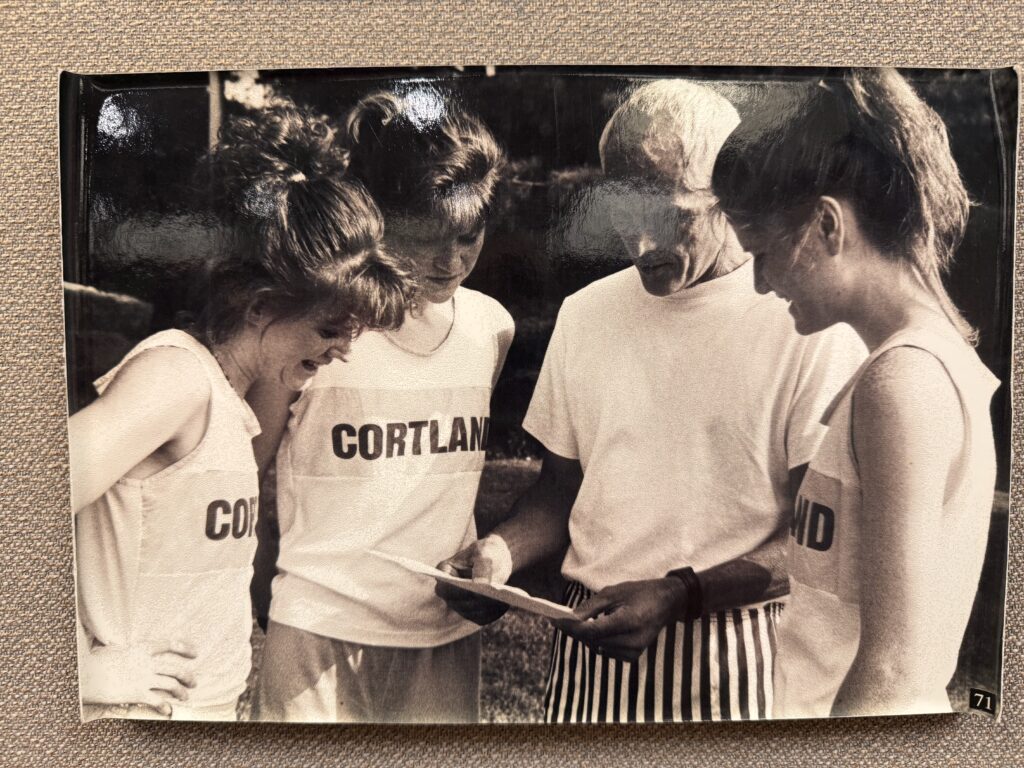
They won’t just talk about Threshold runs, or Interval pace, or the fun environment Jack created at practice, always joking and performing tricks. They’ll talk about fresh bagels in the back of a passenger van on cold road trips. They talk about escaping the dorms for home-cooked dinners, late-night emergency room visits, and an assistant coach who didn’t just shout orders from the sidelines—she laced up her shoes and ran right alongside them, mile after grueling mile.
That coach was Nancy Daniels.
While Jack designed the scientific blueprint, it was the synthesis of Jack’s physiological structure and Nancy’s deep empathy, pacing mastery, and culture-building that built a dynasty. For any coach trying to build a lasting program today, the Cortland era holds a timeless truth: you can calculate training paces in seconds, but you cannot download team culture.
The Athlete Behind the Science
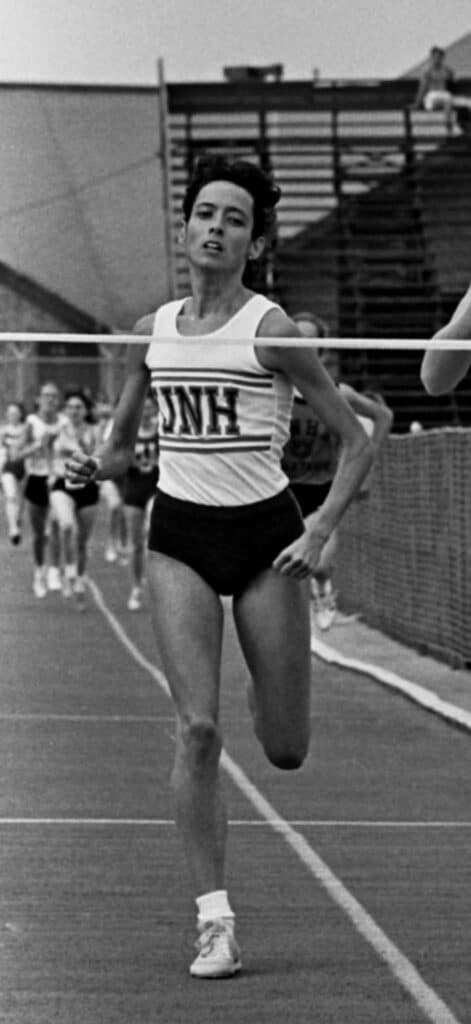 To understand Nancy’s impact at Cortland, you have to look at her background as an athlete.
Jack Daniels came into coaching as a brilliant exercise physiologist and a two-time Olympic medalist in the modern pentathlon. What he didn’t have, however, was a personal background as a competitive pure distance runner. Nancy filled that gap.
Long before she stepped onto the track as an assistant coach at Cortland, Nancy was one of the most formidable distance runners in the Northeast. Her accomplishments include:
- 10-time New England Champion across cross country and track.
- Olympic Trials Qualifier in the marathon.
- Personal bests of 2:08 for 800 meters, 4:18 for 1500 meters (altitude conversion), and a 2:49 marathon dropped in brutal 80-degree heat.
Nancy didn’t just understand running in theory. She had been there and done the work as an elite runner.
Her sense of pace was legendary. At the Steve Prefontaine Meet, Nancy was brought in to rabbit the elite women’s 1500-meter race. She clicked off four consecutive 200-meter splits without varying by a single second, hitting the exact pace requested by the head coach of Nike’s elite Athletics West club. Six women in that field ran personal bests that night.
When she arrived at Cortland, she brought that elite credibility and work ethic… During her second year on staff, Nancy was balancing the demands of coaching, raising a young daughter, and training for the Olympic Trials in the marathon. Rather than standing on the bike path with a stopwatch, she ran with the women’s team every single day.
“This effort, I feel, set the standard for the team,” Nancy recalls. “I didn’t have to tell them how to persevere, how to fight through pain, how to aspire to a goal, or how to want something day in and day out—not just some of the time. I showed them how to do it.”
Her presence on those runs didn’t just set an example, but was also a deliberate coaching strategy. Vicki Mitchell, a seven-time NCAA Champion and 10-time All-American at Cortland, has vivid memories of those workouts:
“Nancy ran distance runs with me. I was not aware of it at the time that she was intentionally pushing the pace to challenge me. In the moment, I understood my task: stay with Nancy. What I later understood was that Nancy was challenging me to be mentally stronger and accept the discomfort that comes with training. Mission accomplished.”
Nancy knew when an athlete was struggling with self-doubt, and she used her pacing ability to gently push them past their perceived limits, building a deep psychological confidence that paid dividends on race day.
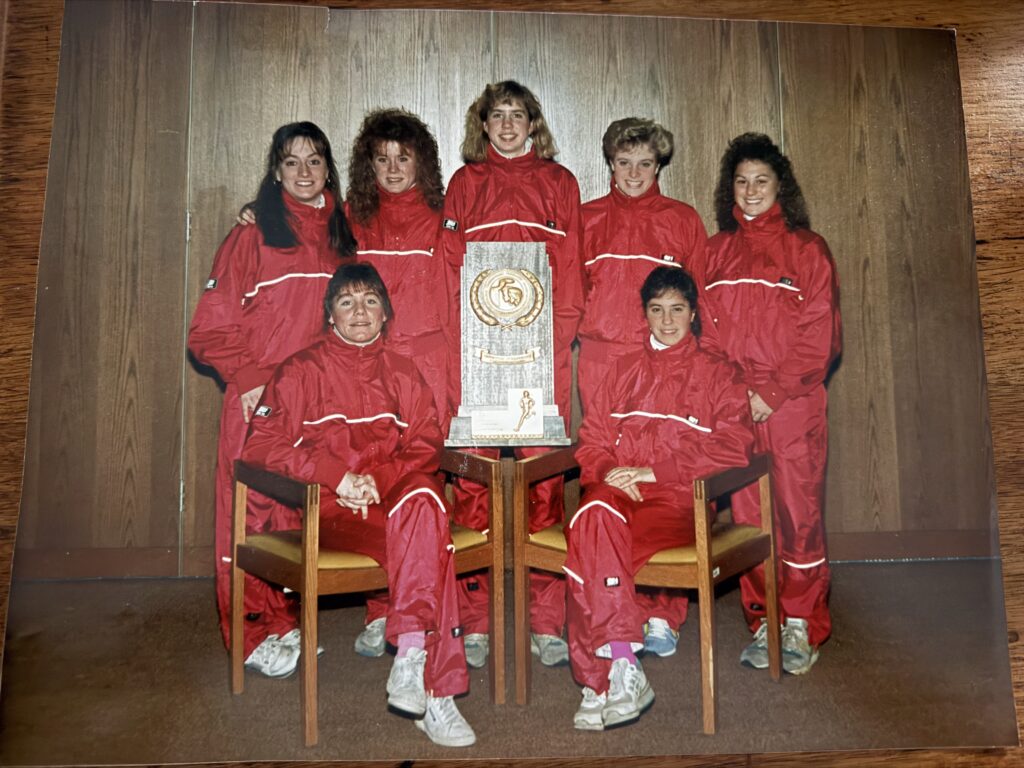
Science Met With Understanding
Nancy’s work wasn’t separate from Jack’s scientific approach; she was actively part of it. Serving as Jack’s research assistant, she gained a hands-on understanding of exercise science principles that went far beyond what most coaches ever acquire.
1984 Olympic Marathon Champion Joan Benoit Samuelson witnessed their unique partnership firsthand, both in the Nike Biomechanics Lab and out on the road as Jack and Nancy prepared her for the 1984 Los Angeles Games:
“Jack and Nancy were very much a part of my success heading into the 1984 Olympics. They worked as a team. Nancy, an excellent and elite athlete herself, understood many of the nuances relating to athletes. She was all business, but also very empathetic and understanding. She knew there was a lot more to the athlete than just their training and results. She helped athletes achieve balance in their lives while being devoted to their careers.”
Samuelson recalls running alongside Nancy in Exeter, New Hampshire, noting that “conversations were never lacking except when we really pushed the pace, or I should say, when Nancy pushed the pace.” Whether helping Jack prepare elite athletes for physiological testing or offering a reassuring word, Nancy brought a grounding presence to high-stakes environments.
“When we both worked in the Nike Biomechanics Lab, Nancy was always there assisting Jack or preparing athletes for testing in a nurturing way,” Samuelson added. “She had the Midas touch when working with a team or individual. She was genuinely interested in athletes regardless of their accomplishments. It was all about the journey with Nancy, and she was always there to help guide athletes.”
Together, Jack and Nancy co-authored their shared philosophy in V.O2’s Coaching Ingredients of Success. Nancy understood the mechanics as well as anyone, but her real strength was figuring out how to deliver that science to real, stressed-out college athletes.
The Intangibles: Caregiving as a Coaching Tool
Long before she ever stepped onto a track, Nancy was wired to look out for others. Growing up in a large family, she was the natural caregiver and looked after her siblings.
When her brother Steve got sick one night, she stayed up with him, and when his condition worsened, she insisted that he be taken to the hospital. When another brother had his tonsils out, she was right there for him with comforting words and ice cream.
That instinct, to step toward someone in distress rather than back away, became a cornerstone of Cortland’s team culture, just as it had comforted elite athletes on the world stage.
When Joan Benoit Samuelson underwent emergency arthroscopic knee surgery just 17 days before the 1984 Olympic Trials, Nancy was right there beside her in Eugene during those anxious days of recovery, offering encouragement to calm her nerves. Nancy brought that same care to the student-athletes at Cortland.
College athletes deal with academic pressure, homesickness, relationship troubles, and self-doubt. Nancy understood that an athlete overwhelmed by life cannot properly absorb a heavy training block. Her response was practical action:
Late-Night Care: When a Cortland thrower was hit on top of his head by a shot put, Nancy didn’t hesitate; she drove straight to the hospital in Syracuse to stay with him. When athletes had medical scares or injuries, she was the one taking them to the ER in the middle of the night.
Quiet Interventions: Leadership means knowing what’s happening when coaches aren’t looking. When Nancy learned through the athlete grapevine that a team captain had driven through the night to Boston to convince his girlfriend not to break up with him—arriving back just in time to load the team van—she didn’t bench or berate him. She intercepted him at the door, handed his keys to someone else, and told him to sleep in the back row for the entire trip. She protected both his safety and his dignity.
Opening Her Home: Bridget Lalley, who ran on the very first team Jack and Nancy coached at Cortland, remembers the relief of getting off campus. She has “fond memories of escaping the dorms and eating dinner at their home… special times.” Jack and Nancy made sure athletes felt cared for as people, not just point-scorers.
The Small Details: On long van rides, Nancy bought fresh bagels, cream cheese, and peanut butter, taking care to remember which athlete loved which specific flavor.
Mark Gaffney, who ran for Cortland in the late 1980s, points to her relentless positivity during races:
“The thing I remember about Nancy was she always had a positive thing to say, no matter how you raced. She always tried to keep your spirit up. During XC races, as you ran past her, she always had encouraging words for you.”
Erin Dinan, a former Cortland athlete who went on to become the Head Coach at Ithaca College, sums it up simply: “She had a gift for making people feel comfortable, welcomed, and valued.”
Tactical Intelligence and Unwavering Belief
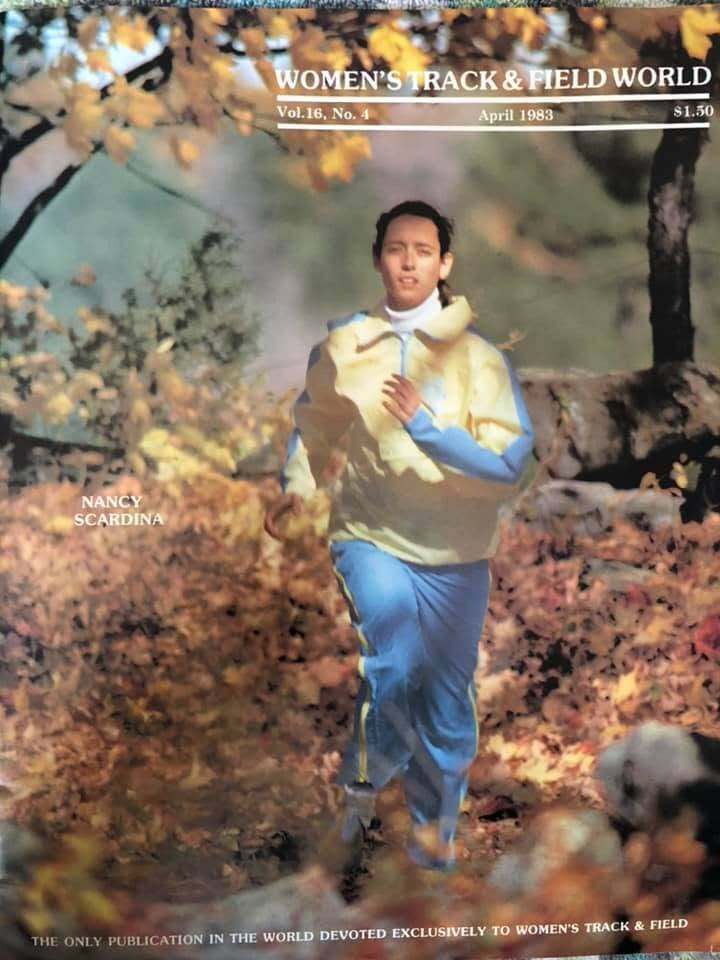 Nancy’s impact was just as visible when meet day arrived.
The day before a major race, while logistics were being sorted, Nancy would physically run the cross-country course herself. She wasn’t just getting exercise; she was scouting. She studied the footing, noted where turns could be taken tightly, flagged hidden roots or mud patches, and pinpointed exactly where a runner should start their kick based on the terrain. When she talked to the runners that evening, she gave them specific, practical details that saved real seconds on the course.
She also had an uncanny ability to instill confidence when an athlete needed it most.
Vicki Mitchell remembers a pivotal moment during her senior year when Nancy took her and freshman teammate Michelle LaFleur to the USATF Cross Country Championships, the trial race for the World XC team:
“We knew that Michelle had an excellent chance of making the USA Junior team. Jack wanted me to race the senior women’s race to be exposed to a higher level of racing. Nancy, Michelle and I ran the course the day before the race. Then we reviewed the key area. We looked at the entries in the Senior race… a list of Olympians and elite US runners… and then me, a little D-3 runner. I was in over my head! Nancy convinced me to toe the starting line, telling me I belonged in the race. She and Jack both had unwavering confidence in me, where I had none. Needless to say, I raced, and I competed well. Nancy was right.”
That kind of belief isn’t something you can write into a training plan. It has to be built over time through genuine relationship and trust.
What Coaches Can Take Away
 In modern distance running, we have access to more data than ever before. We can track training loads, monitor recovery, and calculate target paces with extraordinary precision.
Yet programs with great talent and great training plans still fall short of their potential all the time.
The Cortland dynasty reminds us why. Jack Daniels delivered world-class training science, and Nancy Daniels helped build the trust, culture, and day-to-day environment that allowed athletes to thrive. Her work helped unlock Jack’s brilliance, turning solid training into national championships.
As Joan Benoit Samuelson put it best: “Nancy has always been a giver.”
Workouts don’t run themselves; people do. To build a program that lasts, write great training, but invest just as deeply in the culture and communication that make athletes feel seen, supported, and ready to give everything they have.

Leave A Comment