By Scott Tindal, Co-Founder, Fuelin
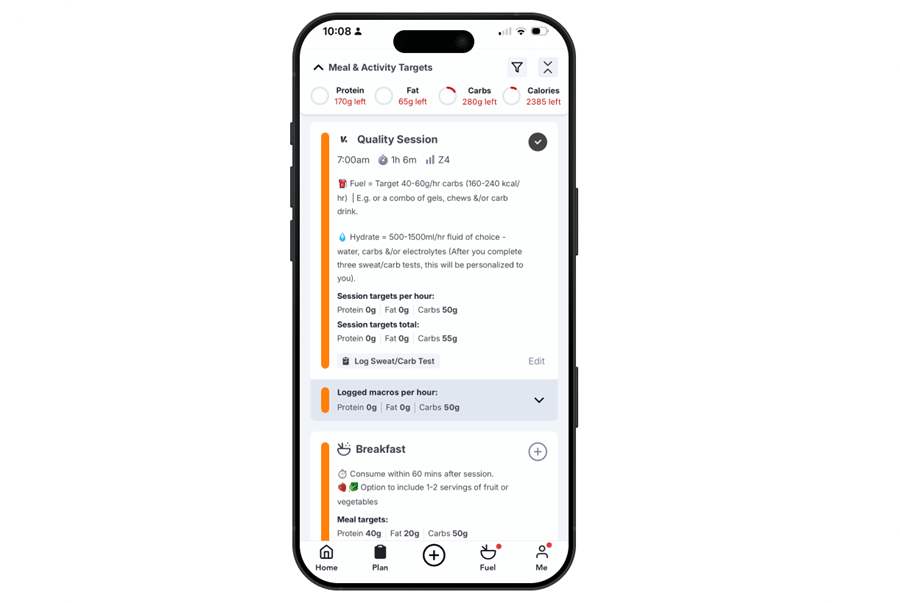
If you’re training consistently through V.O2, you’re likely paying close attention to the variables that drive performance — load, intensity, and recovery. You likely follow the cadence recommendations, the effort, and the durations. But one habit quietly undermines a lot of well-structured training: eating the same way every day, regardless of what’s actually on the schedule.
We call it static eating, and it’s more common than most athletes realize.
Here’s what it typically looks like. Monday is a 90-minute aerobic run. Wednesday is a 30-minute recovery jog. Friday is an Interval session. But across all three days, the meals, macros, and the total energy intake look essentially the same — same portions, same macronutrient split, same same same. It feels disciplined. In practice, it’s misaligned. This is likely because you are using a generic macro tracker that is designed for weight loss. You are not using a nutrition coach that tells you how much to eat to be your best & perform optimally. Generic macro trackers will tell you how little you need to eat to drop some weight with no context around your training schedule. Big big difference!
The Problem with Eating the Same Way Every Day
Your training load is likely not constant, and your energy requirements aren’t either. The difference in fuel demand between a threshold session and a shakeout run is significant. When your nutrition doesn’t reflect that difference, one of two things happens: you’re under-fuelling on hard days and blunting both performance and recovery, or you’re over-fuelling on easy days and storing what the body has no use for.
Neither outcome is neutral. Both compounds over time.
The physiology here is well-established. Carbohydrates are the primary fuel source for moderate to high-intensity running. When training demand is high, your muscles need adequate glycogen to sustain the session and to begin the recovery process afterward. Restrict carbohydrate on those days, and the effects are predictable: flat legs, reduced output, and adaptation that doesn’t quite land. In some cases, you start to enter Low Energy Availability (LEA) territory when this is on an extended period of time – this can be as little as seven days for female athletes. This is not always a problem, and there will always be periods of time when an athlete is in lower energy availability when attempting to lose body weight or body fat. Just how far that deficit is or for how long is the key to not getting sick, injured, or worse.
Load-Matched Nutrition
The approach we use at Fuelin is straightforward: align macronutrient intake to the actual demand of each training day, relative to your body composition and goals.
Higher training load days call for more carbohydrate — before, during, and after sessions where intensity and duration warrant it. Lower load days can pull carbohydrates back. Protein stays consistent across all days to support muscle repair and maintenance. Fat adjusts to meet remaining energy needs. I will say that some rest days can have fairly high carb intakes set as well, certainly in the evening for dinner when the next day’s early morning training sessions demand it. Being prepared and looking beyond the day is a KEY element of a truly periodised and personalised nutrition program.
This isn’t about precision for its own sake. It’s about making sure the food and energy you’re eating is doing something useful relative to what your body is being asked to do.
Why It Matters in the Context of V.O2
V.O2 structures training with intent — each session serves a specific purpose within the broader plan. Nutrition works the same way. Nutrition should always support the training. The training does not support nutrition. When your fueling reflects the periodisation of your training, you give your body the conditions it needs to actually absorb the work and adapt to those demands. When it doesn’t, you’re leaving adaptation on the table regardless of how well you execute the sessions themselves. When you get your nutrition wrong, the easy sessions get harder alongside the threshold and tempo sessions as well.
A practical starting point: look at your week, identify the sessions with the highest load, and treat those as your higher carbohydrate days (>4.0g/kg). Recovery days and rest days are your lower carbohydrate days (<1.8 – 4g/kg). The total amount of carbs will be dependent on your total training volume, your bodyweight, and your body composition goals. Keep protein consistent (1.8-3.0g/kg) throughout. That’s the basic framework — everything else builds from there.
The Bottom Line
Static eating is a default, not a strategy. Your V.O2 training load changes across the week, and your nutrition needs to account for that. When it does, recovery improves, sessions become more productive, and the training you’re putting in via V.O2 actually translates.
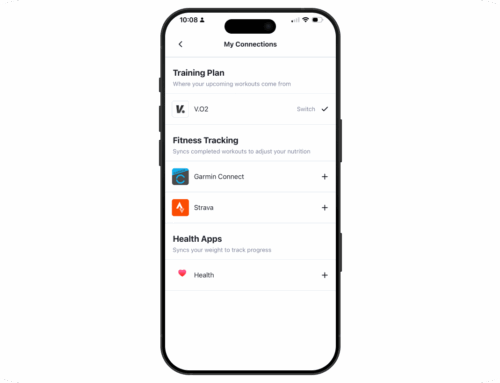
Scott Tindal is co-founder of Fuelin, the nutrition platform built for endurance athletes. Learn more at fuelin.com. Fuelin is now integrated with V.O2 and syncs seamlessly.

Leave A Comment